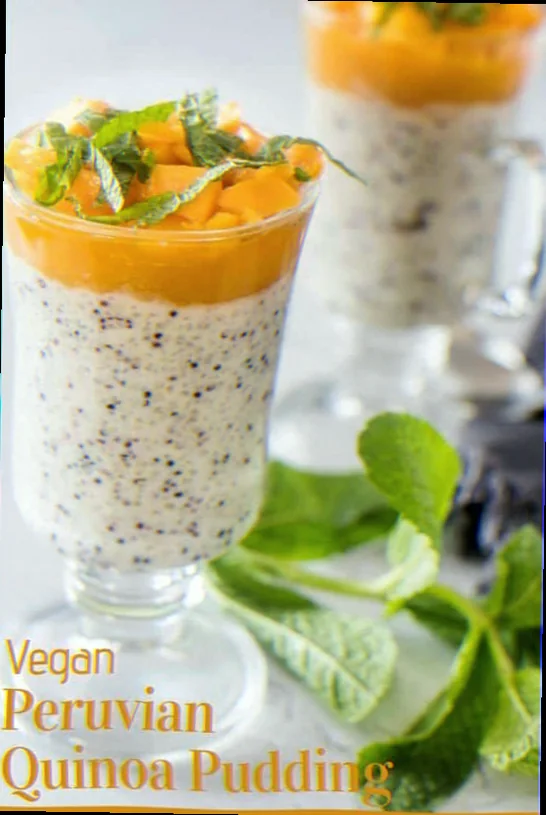
The Last Harvest: How Quinoa Pudding Became a Vegan Relic of the Andes
Lake Titicaca, 1538. The air is thin and sharp with the scent of burning q’owa grass as a Quechua woman stirs a clay pot over a low fire. Inside, golden quinoa—kinwa in her language—swells in the last of the season’s goat’s milk, thickened with toasted kañiwa flour and sweetened with chancaca, the unrefined sugar loaves brought by the Spaniards. She is making api de quinoa, not as a daily meal but as an offering. Tomorrow is the Aymuray, the festival marking the first plowing of the new year, and this pudding, warm and fortifying, will be shared with the apus, the mountain spirits who decide whether the rains will come. The Spaniards call it “pudding.” To her, it is a prayer in a bowl.
Where Quinoa Pudding Comes From—and Why It Was Invented
Quinoa pudding did not emerge as a dessert. It was born as api, a thick, warming porridge-like dish in the high-altitude regions of the Tawantinsuyu—the Inca Empire—long before the 16th century. The problem it solved was survival. At 3,800 meters above sea level, where frost kills maize and potatoes struggle, Chenopodium quinoa thrived. Unlike wheat or barley, quinoa could withstand the Altiplano’s brutal temperature swings, its deep roots tapping into the thin, mineral-rich soil. The Incas called it chisiya mama—“mother grain”—because it was one of the few crops that could reliably feed a population during the chiri wayra, the cold winds that swept the Andes from May to August.
The pudding’s invention was a matter of caloric efficiency. Quinoa alone, while nutrient-dense, was energy-intensive to digest in its whole form. By cooking it slowly with liquid—originally water or chicha (fermented maize beer)—and grinding a portion into flour, the Incas created a dish that delivered both immediate warmth and sustained release of energy. The addition of animal fat (from llamas or alpacas) or, later, dairy from Spanish-introduced goats, transformed it into api, a dish so vital it was served at mit’a (communal work gatherings) and ayni (reciprocal labor exchanges). When the Spaniards arrived, they dismissed quinoa as “Indian food” but adopted the pudding, replacing llama fat with butter and chancaca with refined sugar. What began as a survival strategy became, under colonial rule, a symbol of cultural resistance disguised as compliance.
The Ingredients as Historical Artefacts
Quinoa (Chenopodium quinoa) Domesticated between 3,000 and 5,000 BCE in the Lake Titicaca basin, quinoa was sacred long before it was food. The Incas used it in rituals—sprinkling seeds during planting ceremonies to ensure fertility, or mixing it with coca leaves as an offering to Pachamama (Earth Mother). The Spanish suppression of quinoa was deliberate: in 1570, the Viceroy Francisco de Toledo ordered fields burned to force Indigenous populations to grow wheat. Quinoa survived in hidden highland plots, tended by women who preserved its genetic diversity. The white, red, and black varieties used in pudding weren’t just aesthetic; each had a purpose. White quinoa (blanca) was mild and quick-cooking, ideal for puddings. Red (roja) held its shape better, reserved for stews. Black (negra) was rare, used only in ceremonial dishes due to its earthy, slightly bitter profile.
Kañiwa (Chenopodium pallidicaule) Often confused with quinoa, kañiwa is its smaller, more resilient cousin, grown at even higher altitudes (up to 4,400 meters). The Incas toasted and ground it into flour (harina de kañiwa), which acted as a thickener in api. Unlike quinoa, kañiwa lacks saponins, the bitter protective coating that required laborious rinsing. This made it precious—no wasted water, no lost time. When Spanish mills replaced traditional batanes (stone grinders), kañiwa flour became a quiet act of defiance, a way to preserve texture without colonial tools.
Chancaca (Unrefined Cane Sugar) The first sweetener in Andean puddings was misk’i, a syrup made from fermented maize or fruit. But after the Spanish introduced sugarcane to Peru in the 1530s, chancaca—the raw, molasses-rich sugar loaves—became the dominant sweetener. Unlike refined sugar, chancaca retained minerals like iron and calcium, making it a nutritional (if colonial) upgrade. Its deep caramel notes complemented quinoa’s nuttiness, but its use was politically charged: by the 17th century, chancaca was produced in coastal haciendas using enslaved African labor, then traded inland. Every spoonful of sweetened api carried the weight of that exploitation.
Plant-Based Milk (The Modern Substitution) The original api was never vegan—it relied on animal fat or, post-conquest, dairy. But the shift to plant milks in contemporary versions isn’t just dietary preference; it’s a return to pre-colonial logic. Almond milk (introduced by Spanish moriscos) and coconut milk (via African and Asian trade routes) were later additions, but the most historically resonant substitute is chicha-infused water. Fermented maize chicha was the liquid base for many Andean dishes before dairy arrived, and its slight tang cuts through quinoa’s richness. Modern vegan versions that use oat or cashew milk are, ironically, closer to the Inca api than the colonial dairy-laden ones.
Aymuray and the Ritual of Sharing Warmth
Api de quinoa was—not is—the centerpiece of Aymuray, the Quechua and Aymara festival marking the start of the agricultural cycle in August. The pudding’s thick, sticky consistency wasn’t accidental: it mirrored the tarpuy, the plowed earth, and its warmth symbolized the sun’s return. Families gathered before dawn to eat it communally from a single misk’i (clay bowl), passing it counterclockwise to honor the apus. The first spoonful was always offered to the mountains, the rest shared among laborers to fortify them for the day’s work.
The dish’s texture was ritualized. Too thin, and it disrespected the apus; too thick, and it was seen as greedy, hoarding resources. The ideal api had the consistency of wet cement—firm enough to hold its shape when scooped with a ch’alla (wooden spoon), but fluid enough to pour as a libation. The addition of muña (Andean mint) or q’illu (a native herb) wasn’t just for flavor; their aromas were believed to carry prayers upward.
Today, Aymuray is still celebrated in rural Peru and Bolivia, but the pudding is often made with powdered milk and white sugar—colonial ingredients that have become “traditional.” The irony isn’t lost on elders: a dish invented to resist hunger now sometimes perpetuates nutritional colonialism.
How Migration Changed Quinoa Pudding Forever
The pudding’s first major transformation happened in the barrios altos of Lima in the 19th century. Enslaved Africans and Indigenous migrants, displaced by the hacienda system, adapted api using ingredients from coastal markets. Coconut milk, brought by Afro-Peruvian communities, replaced dairy in api de coco, a version still sold in Lima’s mercados. By the 1950s, Peruvian immigrants in the U.S. (particularly in Paterson, New Jersey, and Los Angeles) faced a new problem: quinoa was unavailable. They substituted rice or cornmeal, creating arroz con leche-style puddings that bore little resemblance to the original.
The vegan quinoa pudding we know today is a child of 21st-century globalization. Health food stores in Berlin and Brooklyn stock quinoa as a “superfood,” stripped of its cultural context. The pudding’s reinvention as a vegan dessert—often sweetened with agave or maple syrup—erases its ritual roots. Yet, in a twist, this adaptation has also revived interest in Andean ingredients. Chefs like Virgilio Martínez (of Central in Lima) now serve deconstructed api with foraged herbs, while Quechua activists use the dish to teach language and history in workshops.
What was lost? The communal act of eating from a single bowl. The precise texture, tied to altitude and clay pots. The understanding that this was never just food—it was a contract with the land.
What was gained? Survival, again. In a world where quinoa is now grown in Colorado and Denmark, the pudding endures as a bridge between resistance and assimilation.
How to Make Quinoa Pudding—the Recipe in Full
| Ingredient | Quantity | Why It’s Here |
|---|---|---|
| White quinoa | 200g | The blanca variety cooks softly, absorbing liquid without turning mushy. |
| Kañiwa flour | 30g | Toasted and ground, it thickens the pudding like a pre-colonial roux. |
| Coconut milk | 800ml | A nod to Afro-Peruvian adaptations; its fat mimics the richness of goat’s milk. |
| Chancaca or panela | 100g, grated | Unrefined sugar retains minerals and a deep molasses note. |
| Muña (Andean mint) | 2 fresh leaves | Added at the end for aroma; traditionally used to “awaken” the dish. |
| Pink salt | 3g | Harvested from Maras salt mines, used since Inca times. |
| Toasted quinoa | 20g | Sprinkled on top for texture, echoing the t’anta wawa (bread babies) offered to Pachamama. |
Method:
Begin by toasting the quinoa. Heat a dry cazuela (or heavy pot) over medium heat (160°C) and add the quinoa, stirring constantly until it emits a nutty aroma and turns a pale gold—about 5 minutes. This step, called ch’ampar in Quechua, was traditionally done in a tiyana (clay griddle). The toasting isn’t just for flavor; it removes residual moisture, preventing the pudding from turning sour during slow cooking.
In the same pot, add 600ml of coconut milk and the grated chancaca. Stir until the sugar dissolves, then bring to a gentle simmer (90°C). The temperature matters: too hot, and the coconut milk will separate; too cool, and the quinoa won’t soften. This is where the altitude of the Andes dictated technique—water boils at 88°C in Cusco, so simmering was always a precise, low-heat affair.
Whisk in the kañiwa flour, stirring vigorously to avoid lumps. This is the moment where the pudding’s texture is decided. The flour, toasted earlier until it darkened to a light brown, should smell like hazelnuts. If it’s under-toasted, the pudding will taste raw; if over-toasted, it will bitter. The Incas judged doneness by smell, not color—a skill lost in modern kitchens.
Add the remaining 200ml of coconut milk and the quinoa. Reduce the heat to the lowest setting (80°C) and cover with a tapa (lid) or, traditionally, a corn husk to trap steam. Cook for 40 minutes, stirring every 10 minutes. The pudding is done when the quinoa grains have “opened” (their germs will spiral outward) and the liquid has thickened to the consistency of wet clay.
Off the heat, tear the muña leaves into the pudding and let steep for 5 minutes. The leaves should infuse a faint anise-like aroma—any stronger, and it overpowers the quinoa. Sprinkle with toasted quinoa and pink salt before serving.
Serve warm, in small bowls, with the understanding that this was never meant to be a solo dish. In Quechua culture, food shared is food blessed.
The Tension: What Authenticity Actually Means for Quinoa Pudding
Purists insist on three non-negotiables:
- The quinoa must be Andean. Bolivian or Peruvian white quinoa (Chenopodium quinoa var. Blanca de Junín) is the only variety with the right starch structure. North American quinoa, bred for yield, lacks the delicate balance of protein and saponins that give the pudding its body.
- The sweetener must be chancaca. Refined sugar or agave alters the pudding’s pH, making it cloying rather than complex. Chancaca’s molasses content reacts with the quinoa’s amino acids, creating a caramelized depth.
- It must be cooked in clay. Modern pots conduct heat too evenly. Clay allows for gradual, uneven heating, which prevents the quinoa from turning to paste.
Are they right? Partially. The quinoa’s origin matters—Bolivian quinoa has a higher saponin content, which, when properly rinsed, gives the pudding a subtle bitterness that balances the sweetness. But the insistence on chancaca is more ideological than practical. Pre-colonial api used misk’i or honey; chancaca was a colonial adaptation. The real tension isn’t about ingredients but about intention. A pudding made with North American quinoa and almond milk in a Le Creuset pot is still api if it’s shared as an offering. One made with “authentic” ingredients but eaten alone at a desk is not.
The most contentious substitution is dairy. Vegan versions that use coconut milk are often dismissed as “inauthentic,” yet coconut milk was introduced by Afro-Peruvians—another marginalized group preserving the dish in their own image. Authenticity, here, is a moving target.
What Quinoa Pudding Has Become—and What That Tells Us
Related topics: Vegan asian recipe book · Jackfruit pulled pork vegan recipe · Vegan buttercream recipe
In 2013, the UN declared the “International Year of Quinoa,” and the pudding became a global trend. Food blogs rebranded it as “Peruvian rice pudding” or “Andean chia pudding,” stripping it of context. In Lima’s miradores (tourist restaurants), it’s served in martini glasses with edible flowers. In Berlin, it’s a vegan breakfast bowl topped with granola. In Cusco’s mercados, it’s still sold by Quechua women in plastic cups for 5 soles.
This bifurcation reveals how food moves through power. The pudding’s “elevation” in Western kitchens often involves adding expensive superfoods (goji berries, maca powder) that would baffle its creators. Meanwhile, in the Andes, it’s increasingly made with powdered milk and white sugar—not by choice, but because those are the cheapest options in a globalized food