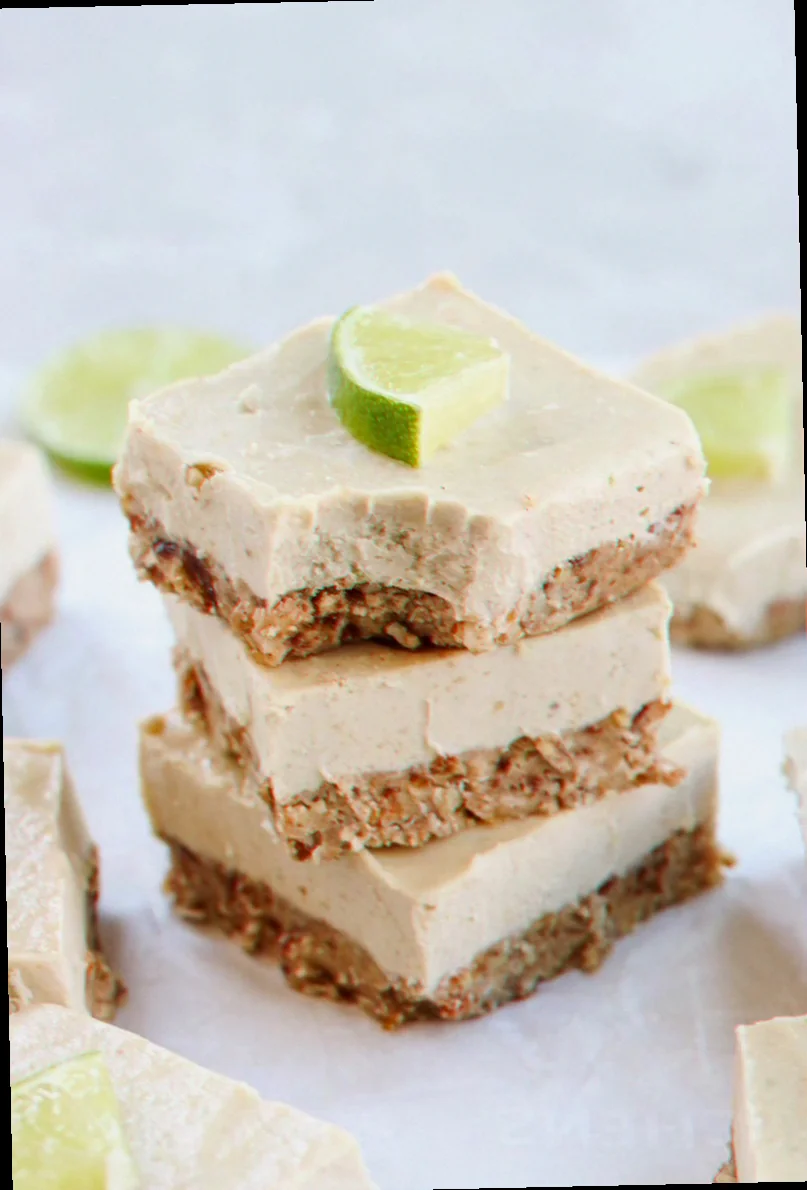
The Bitter-Sweet Alchemy of the Florida Keys: How a Sailor’s Ration Became a Vegan Luxury
The air in the kitchen of a 19th-century Bahamian wrecker’s home was thick with the scent of lime zest and the low hum of a hand-cranked eggbeater. Outside, the turquoise waters of the Florida Straits lapped against the stilts of the house, where salvaged goods from shipwrecks—barrels of hardtack, sacks of sugar, and the occasional crate of Key limes—were traded like currency. On the wooden table, a woman named Mariah, her hands rough from mending nets, pressed the last of the season’s limes into a bowl of sweetened condensed milk, a luxury pilfered from a Spanish galleon’s cargo. She was making what her grandmother called “tarta de lima agría”—a tart so sharp it could wake a sailor from a rum stupor, yet so rich it felt like stolen treasure. This was not dessert as indulgence, but as survival: a way to preserve the fleeting citrus harvest in a place where fresh milk spoiled in hours and ice was a myth.
Today, we call it key lime pie—or, in its modern reinvention, vegan key lime bars. But to understand how a dish born of scarcity and ingenuity became a symbol of tropical decadence (and later, a plant-based pastry shop staple), we must first follow the bitter little lime that started it all.
Where Vegan Key Lime Bars Come From — and Why They Were Invented
The original key lime pie emerged in the late 1800s along the sponge-diving and wrecking communities of the Florida Keys, a stretch of coral islands where Bahamian immigrants, Cuban fishermen, and Anglo-American settlers collided. The dish was a product of three constraints: a climate too hot for dairy, a lack of ovens in most homes, and an abundance of Key limes (Citrus aurantiifolia), a small, thin-skinned fruit introduced by Spanish explorers via the Caribbean slave trade routes in the 16th century.
Unlike the Persian limes we see today, Key limes are aromatic, searingly acidic, and packed with volatile oils—qualities that made them ideal for preserving in the era before refrigeration. The first “pies” were likely unbaked custards, thickened with egg yolks (a byproduct of the sponge-diving industry, where eggs were used to test water purity) and sweetened with condensed milk, which had been invented in 1856 by Gail Borden as a non-perishable dairy product for soldiers and sailors. The graham cracker crust—a later addition—came from the temperance movement’s influence in the early 1900s, when Sylvanus Graham’s whole-wheat crackers were marketed as a wholesome alternative to sinful pastries.
The vegan iteration, however, is a 21st-century reinvention, born not of necessity but of ethical and environmental imperatives. The substitution of aquafaba (chickpea brine) for egg yolks and coconut cream for condensed milk mirrors the original’s resourcefulness, but flips the script: where Mariah used what she had, modern vegan bakers use what they won’t.
The Ingredients as Historical Artefacts
Key Limes (Citrus aurantiifolia)
The soul of the dish arrived in the Americas via Spanish conquistadors, who carried lime seeds from Southeast Asia to the Caribbean in the 1500s. By the 1800s, Key limes thrived in the alkaline, sandy soil of the Florida Keys, where they were cultivated by Bahamian and Cuban immigrants who used them to prevent scurvy (a sailor’s curse) and flavor everything from mojo sauce to rum punch. The 1926 Miami Hurricane nearly wiped out the Key lime industry, leading to its replacement with the hardier Persian lime—but the original’s higher acidity and floral bitterness remain irreplaceable in authentic versions.
Substitution tension: Persian limes lack the terpinene and limonene compounds that give Key limes their piney, almost mentholated edge. A true Key lime tart should make your cheeks pucker before the sweetness hits.
Sweetened Condensed Milk
Invented in 1856 by Gail Borden as a way to preserve milk without refrigeration, condensed milk became a staple in tropical and wartime kitchens—including those of the Florida Keys, where fresh dairy was scarce. Its caramelized, almost toffee-like richness balanced the limes’ acidity, while its high sugar content acted as a preservative. In vegan versions, coconut cream mimics the fat content, but loses the Maillard reaction depth of dairy.
Graham Cracker Crust
The crust is a 1930s addition, popularized by tourist restaurants in Key West that wanted to give the pie a “proper” American dessert format. The original graham cracker was a temperance food, invented by Reverend Sylvanus Graham in 1829 as part of his crusade against “overstimulation” (i.e., meat, alcohol, and white flour). Ironically, his crackers became the base for one of the most indulgent pies in America.
Modern vegan swap: Digestive biscuits or oat flour bind with coconut oil, but lack the molasses and cinnamon notes of true graham crackers.
The Wrecker’s Feast — When and Why This Dish Is Made
In the Florida Keys, key lime pie was not a celebratory dessert but a utilitarian one, eaten year-round as a way to use up egg yolks (the whites were saved for clarifying rum) and prevent lime spoilage. However, it became associated with two rituals:
- The End of Hurricane Season (November) — When the last of the summer limes were harvested, families would make tarts to celebrate survival and share with neighbors. The pie’s bright acidity was a defiant contrast to the stormy months.
- Wrecking Crews’ “Dividing Day” — After salvaging a ship, crews would gather to divide the spoils, often including sugar, limes, and eggs. A key lime tart was a symbol of shared luck, its tartness cutting through the salt of the sea and the sweetness of a profitable haul.
The modern vegan version, however, has been recontextualized as a luxury—a plant-based pastry shop item or a potluck showstopper, where its vibrant green hue (often enhanced with spirulina or matcha in vegan versions) signals virtue as much as flavor.
How Migration Changed Key Lime Pie Forever
The dish’s first major transformation came in the 1930s, when Key West’s tourism boom turned it into a restaurant staple. Chefs replaced the traditional meringue topping (made with egg whites) with whipped cream, which was seen as more “American.” Then came the 1950s canned lime juice era, when Nestlé and Borden began marketing condensed milk and lime juice as a convenience duo, stripping the pie of its seasonal, local identity.
The vegan adaptation emerged in the 2010s, driven by two forces:
- The aquafaba revolution (2014–2016), where vegan bakers discovered that chickpea brine could mimic egg whites.
- The Florida Keys’ own environmental crisis—as rising sea levels threatened lime groves, chefs like Norman Van Aken began experimenting with sustainable versions, using local coconuts instead of dairy.
What was lost? The unknowable complexity of a hand-squeezed Key lime, which varies in acidity based on rainfall and soil. What was gained? A dish that no longer relies on exploitation—neither of hens (for eggs) nor of dairy cows.
How to Make Vegan Key Lime Bars — The Recipe in Full
| Ingredient | Quantity | Why It’s Here |
|---|---|---|
| Key limes (or Persian limes) | 120ml juice, 10g zest | The soul of the dish; Key limes offer higher terpene content for depth. |
| Full-fat coconut cream | 400g | Replaces condensed milk’s fat and sugar, but lacks dairy’s caramel notes. |
| Aquafaba | 120ml | Whips like egg whites, but with a cleaner, less sulfurous flavor. |
| Graham cracker crumbs | 200g | The temperance movement’s legacy—sweet, spiced, and structural. |
| Coconut oil | 80g | Binds the crust; a nod to the Caribbean roots of the dish. |
| Agave syrup | 60g | Adjusts sweetness without overpowering the lime’s bitterness. |
| Cornstarch | 15g | Thickens the filling, mimicking the egg yolk’s custard effect. |
Method
The Crust: A Wrecker’s Foundation Preheat the oven to 180°C (350°F). Combine the graham cracker crumbs and melted coconut oil in a bowl until the mixture resembles wet sand—this texture is crucial, as it mimics the coarse, hand-pressed crusts of early Key West pies. Press firmly into a 20cm square pan, using the bottom of a glass to compact it (a trick from Bahamian coconut tart traditions). Bake for 10 minutes until the edges darken slightly—the Maillard reaction here is subtle but essential for depth.
The Filling: Alchemy of Acid and Fat In a saucepan, gently heat the coconut cream, agave, and cornstarch until it thickens to the consistency of melted ice cream (about 82°C/180°F). Remove from heat and whisk in the lime juice and zest. The mixture will curdle slightly—this is intentional, a remnant of the original’s egg-based coagulation. In a separate bowl, whip the aquafaba to stiff peaks (a process that takes 8–10 minutes with a hand mixer; early vegan bakers used electric beaters borrowed from diners). Fold the aquafaba into the lime mixture in three additions, maintaining as much air as possible—this is where the modern version diverges most from the original, trading density for a mousse-like lightness.
The Set: Patience as Preservation Pour the filling over the crust and refrigerate for at least 6 hours. The cornstarch will retrograde, giving the bars a firm yet silky texture reminiscent of the original’s egg-based set. Before serving, dust with toasted coconut flakes—a nod to the Cuban influence in Key West cuisine.
The Great Lime Debate — What Authenticity Actually Means
Purists insist on three non-negotiables:
- Key limes over Persian (though even in Florida, 90% of “key lime pie” is made with Persian limes due to cost).
- Condensed milk (vegan versions lose the caramelized milk solids that define the original).
- No green food coloring (the filling should be pale yellow, not neon).
But here’s the truth: The original was a dish of adaptation. Bahamian wreckers used sour oranges when limes were scarce. Cuban immigrants added guava paste to stretch the filling. The vegan version is just the latest iteration—one that honors the spirit of resourcefulness even as it breaks from tradition.
What changes the dish fundamentally?
- Using bottled lime juice (loses the volatile oils that give fresh zest its punch).
- Skipping the zest (the limonene in the peel is what lingers on the palate).
- Over-sweetening (the original was tart enough to make you wince—a test of the eater’s endurance).
What Vegan Key Lime Bars Have Become — and What That Tells Us
Today, vegan key lime bars are two things at once:
- A nostalgic mimicry of a classic, sold in plant-based bakeries from Berlin to Los Angeles.
- A political statement—a dessert that rejects industrial dairy while paying homage to a dish born of colonial trade and survival.
In the Florida Keys, where climate change threatens the very limes that define the pie, some chefs are now making hybrid versions—using local coconuts and aquafaba from Key West-grown chickpeas, turning the dish into a symbol of resilience.
Perhaps that’s the most authentic thing about it: Key lime pie has always been a dish of reinvention. From a wrecker’s ration to a vegan luxury, it endures because it bends without breaking—just like the people who first made it.
Questions About Vegan Key Lime Bars
What is the single ingredient you should never substitute?
Key lime zest. The aromatic oils in the peel (particularly d-limonene and citral) are heat-sensitive and evaporate quickly—bottled lime juice or pre-grated zest won’t replicate the bright, almost floral top notes. If you must use Persian limes, increase the zest by 50% to compensate for their lower oil content.
Related topics: Vegan baby food recipe book · Vegan pumpkin spice drink recipe · Jackfruit pulled pork vegan recipe
How does the Florida Keys version differ from the vegan adaptation?
| Florida Keys (1900s) | Vegan (2020s) |
|---|---|
| Unbaked custard (egg yolks + condensed milk) | Baked or chilled (aquafaba + coconut cream) |
| Gritty, dense texture (from hand-beaten eggs) | Light, mousse-like (whipped aquafaba) |
| Pale yellow filling (no coloring) | Often bright green (matcha or spirulina added) |
| Meringue topping (egg whites) | Coconut whipped cream (or omitted) |
Is there a version accessible without special equipment?
Yes—skip the aquafaba and use silken tofu blended with lime juice, coconut cream, and cornstarch for a firm, custard-like texture. The result will be less airy but closer to the original’s density. Use a food processor to grind graham crackers if you don’t have a rolling pin, and chill in the freezer for 2 hours if you’re short on time. The flavor will still sing—because in the end, this is a dish that thrives on improvisation.