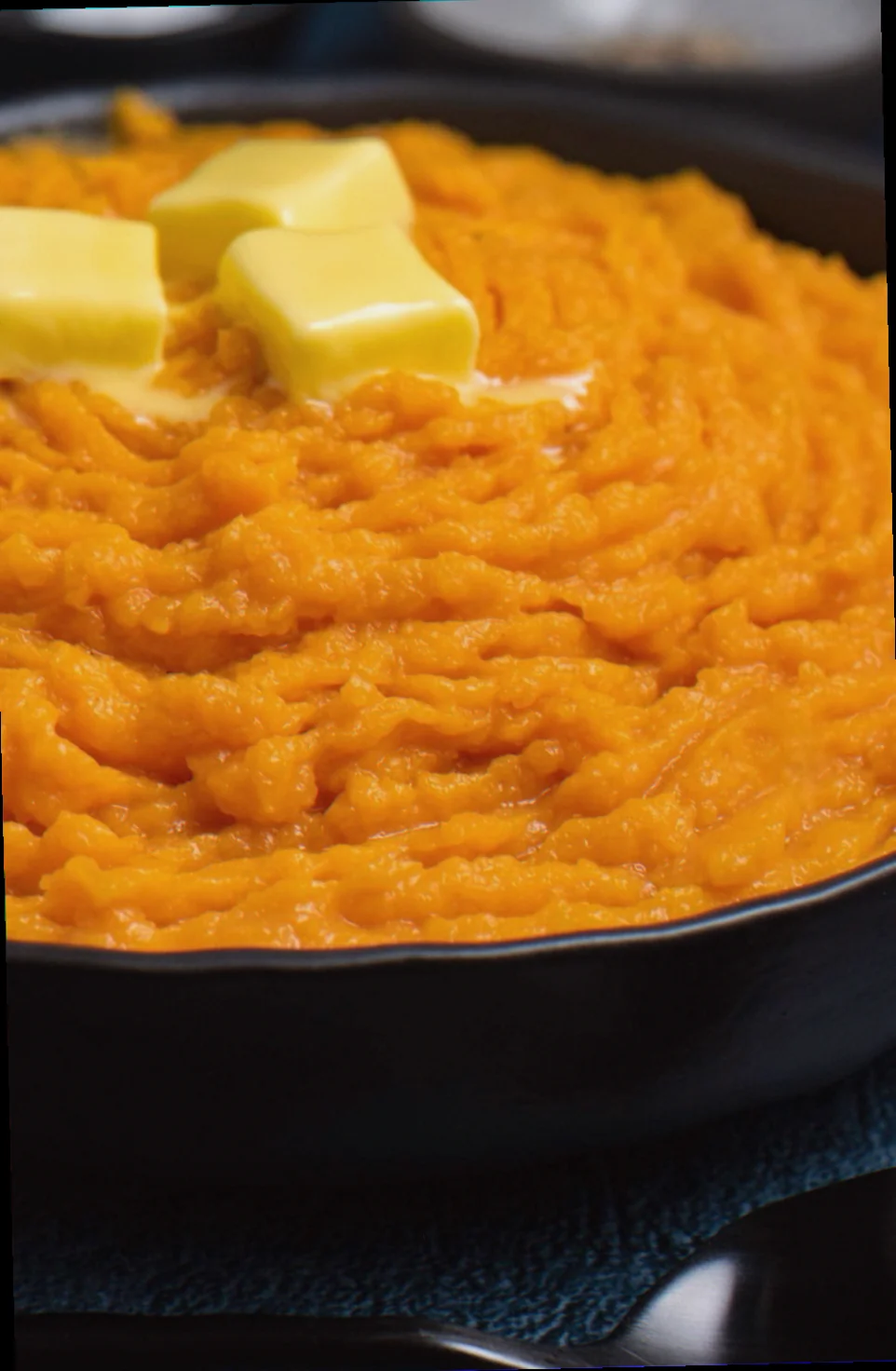
The Fire and the Root: How Mashed Sweet Potatoes Became a Quiet Revolution
The air in the barbacoa pit is thick with woodsmoke and the damp, earthy scent of leaves curling in the heat. A woman—her hands stained with the rust-coloured juice of camote—presses the roasted tubers through a woven sieve, their flesh yielding like warm clay. It is late November in Oaxaca’s Central Valleys, and the Día de los Muertos altars still hold the last of their pan de muerto, but the real offering is this: a bowl of sweet potatoes, mashed with lard rendered from the same pigs that will feed the living through the lean months ahead. The dish is called purepecha, though no one here calls it that anymore. It is simply lo que se come cuando no hay maíz—what you eat when the corn runs out.
This is not a story about scarcity, though. It is about resilience. The sweet potato, Ipomoea batatas, was never meant to be a backup plan. It was a lifeline, a crop that thrived where others faltered, a root that traveled farther than the people who first dug it from the earth. And when it met the heavy wooden pestle of a Mixtec cook, it became something more: a dish that carried memory in its texture, politics in its sweetness, and survival in its simplicity.
Where Mashed Sweet Potatoes Come From—and Why They Were Invented
The sweet potato’s journey begins not in Mexico, but in the highlands of Peru, where archaeologists have found its starch grains in caves dating back 10,000 years. By 2500 BCE, it was domesticated in the Andes, a crop so hardy it could grow in the thin air of 3,000-meter altitudes and the arid coastal deserts where little else would take root. The Quechua called it kumar, the Aymara apichu. But its real transformation happened when it left South America—not by European hands, but by Polynesian voyagers, who carried it across the Pacific to New Zealand by 1200 CE, long before Columbus.
When the Spanish arrived in Mexico in the 16th century, they found the sweet potato already there, brought north by Indigenous traders or perhaps by pre-Columbian seafarers. The Aztecs called it camotli, and though they preferred maize, they knew its value: a crop that could be stored for months, that grew in poor soil, that fed people when the rains failed. In the Central Valleys of Oaxaca, the Zapotec and Mixtec peoples mashed roasted sweet potatoes with animal fat—not as a delicacy, but as a caloric anchor. The technique was practical: roasting concentrated the sugars, mashing made it digestible for children and elders, and the fat (often from wild game or, later, pigs) stretched the meal’s sustenance.
But the dish’s meaning shifted with colonization. When Spanish landowners seized the best maize fields, sweet potatoes became a staple of resistance. Enslaved Africans in the Caribbean, forced to work sugarcane plantations, were given sweet potatoes as rations—they mashed them with coconut milk, a substitution born of necessity. In the American South, enslaved people turned sweet potatoes into pies and puddings, their recipes later appropriated as “Southern comfort food.” The mashed sweet potato, in all its forms, was never just food. It was a quiet act of defiance, a way to turn what was given into something that nourished more than the body.
The Ingredients as Historical Artefacts
Sweet Potatoes (Ipomoea batatas)
The sweet potato is a traveler, a crop that crossed oceans before global trade routes were formalized. The orange-fleshed varieties now dominant in the U.S. were bred in the early 20th century for their high beta-carotene content, but the original Andean sweet potatoes were white, purple, or pale yellow—less sweet, more starchy. When the Spanish introduced them to the Philippines in the 16th century, they became kamote, a staple in ginataan (coconut milk stews). In West Africa, they were called nyami and cooked into fufu-like pastes. The sweet potato’s adaptability is its defining trait: it is the only major crop domesticated in the Americas that spread globally before European colonization.
Animal Fat (Lard, Coconut Milk, Palm Oil)
The fat in mashed sweet potatoes is never neutral. In Oaxaca, lard was a colonial import—pigs arrived with the Spanish—but Indigenous cooks adopted it because it rendered easily and kept for months. In the Caribbean, enslaved Africans used coconut milk, a substitution that reflected both the absence of pigs and the presence of palm trees. In West Africa, red palm oil was stirred into mashed sweet potatoes, giving the dish a golden hue and a faint bitterness. The choice of fat was always a map of displacement: lard in the Americas, coconut in the tropics, palm oil in West Africa.
Salt (and the Absence Thereof)
Salt is the silent marker of power in this dish. In pre-Columbian Mesoamerica, salt was a controlled commodity, traded along routes like the Camino de la Sal in Oaxaca. The Zapotec elite monopolized its distribution, so rural communities often mashed sweet potatoes without it, relying on the natural sweetness to carry the flavor. When the Spanish disrupted these trade networks, salt became scarce for Indigenous peoples, and the unsalted sweet potato mash persisted as a dish of the marginalized. Today, adding salt to mashed sweet potatoes in Oaxaca is still a deliberate choice—some cooks leave it out as a nod to the past.
Día de los Muertos and the Ritual of Shared Sweetness
In Oaxaca, mashed sweet potatoes appear on altars during Día de los Muertos not because the dead crave them, but because the living remember hunger. The dish, often sweetened with piloncillo (unrefined cane sugar), is left as an offering to ancestors who survived famine, colonization, and displacement. Its texture—thick enough to hold its shape, soft enough to melt on the tongue—mirrors the ideal of communal care: substantial but not indulgent.
In the American South, sweet potato pies became a centerpiece of Juneteenth celebrations after emancipation. The dish, once a ration, was reclaimed as a symbol of freedom. The addition of spices like cinnamon and nutmeg (brought by the spice trade) was an act of luxury, a way to say: We are no longer limited to what we were given.
In Ghana, ampesi—a mash of sweet potatoes, yams, and plantains—is served at funerals. The dish’s starchy heaviness is meant to “weigh down” the grief of the living, to ground them. The sweet potato’s role in these rituals is never passive. It is a bridge between memory and the present, a way to taste history.
How Migration Changed Mashed Sweet Potatoes Forever
The dish’s first major transformation happened in the Caribbean. Enslaved Africans, given sweet potatoes as rations, mashed them with coconut milk and spices smuggled from the spice islands. The result was candied sweet potatoes, a dish that later morphed into the American Thanksgiving classic. The addition of brown sugar and marshmallows (a 20th-century marketing invention) erased the dish’s origins, turning a survival food into a symbol of abundance.
In the Philippines, camote cue—deep-fried sweet potato slices coated in caramelized brown sugar—became a street food staple. The technique (frying) was Chinese, the sugar was Spanish, and the sweet potato was Indigenous American. The dish was a collision of empires, sold by vendors who had no stake in any of them.
In Japan, sweet potatoes arrived via Portuguese traders in the 16th century. The Japanese bred their own varieties, like the purple satsumaimo, and turned them into daigaku imo—candied sweet potatoes named after the elite universities, a sarcastic jab at their expensive taste. The dish was a working-class treat, a way to mock the rich while enjoying something sweet.
Each migration stripped the dish of one layer of meaning and added another. The lard became coconut milk became marshmallows. The wooden pestle became an electric mixer. The dish survived, but its story fractured.
How to Make Oaxacan-Style Mashed Sweet Potatoes—The Recipe in Full
This is not the sweet, spiced puree of American Thanksgiving. This is purepecha, the way it was made in the Central Valleys: unsweetened, unspiced, a blank canvas for memory.
| Ingredient | Quantity | Why It’s Here |
|---|---|---|
| Orange-fleshed sweet potatoes | 1 kg | The variety closest to the Andean originals, high in moisture and sugar. |
| Lard (or coconut oil) | 60 g | Lard was a colonial addition; coconut oil is a vegan substitute with historical precedent. |
| Sea salt | 5 g (or none) | Salt was a luxury; omitting it honors the dish’s origins as peasant food. |
| Water | 120 ml | To adjust texture—traditionally, the mash was thick enough to eat with hands. |
Method:
Begin with the fire. In Oaxaca, sweet potatoes are roasted in the barbacoa pit, their skins blackened by woodsmoke. At home, preheat your oven to 200°C and roast the sweet potatoes whole, unpeeled, on a bed of salt (if using) for 45–60 minutes, until their flesh yields to a knife. The skin will wrinkle and darken in spots—this is not burning, but caramelization, the first layer of flavor.
While the sweet potatoes roast, render the lard (or melt the coconut oil) in a heavy pot over low heat. The fat should be liquid but not smoking; in Oaxaca, this would be done in a cazo, a copper pot that distributes heat evenly. If using coconut oil, choose unrefined—its faint nuttiness is closer to the original lard’s depth.
When the sweet potatoes are cool enough to handle, peel them. Their flesh should be the color of sunset, deep orange and steaming. Pass them through a food mill or mash them by hand with a wooden spoon—the texture should be uneven, with some fibers remaining. This is not a smooth puree. It is meant to have tooth, a reminder of the root’s origin in the earth.
Stir the mashed sweet potatoes into the warm fat, adding water a little at a time. The mixture will darken slightly as the lard emulsifies. Taste. If you add salt, add it sparingly. The dish should taste of sweetness first, then the roundness of fat, then—if you listen—the faint bitterness of the skin’s char.
Serve warm, in a clay bowl if you have one. In Oaxaca, it would be eaten with a spoon or torn pieces of tortilla de maíz. The contrast of the sweet mash and the corn’s graininess is intentional: one is the food of scarcity, the other of tradition.
The Tension: What Authenticity Actually Means for This Dish
Purists will tell you that lard is non-negotiable. They are wrong.
The “authentic” version of this dish is a moving target. In Oaxaca, the oldest recipes use no salt. In the Caribbean, coconut milk is sacred. In the American South, marshmallows are heresy to some and tradition to others. The real tension is not about ingredients, but about who gets to define the dish’s soul.
The only irreplicable element is the technique of roasting. Microwaving or boiling sweet potatoes changes their flavor fundamentally—roasting concentrates their sugars and adds depth through caramelization. This is not gatekeeping; it is chemistry. The rest is adaptation.
What Mashed Sweet Potatoes Have Become—and What That Tells Us
Today, mashed sweet potatoes are a vegan staple, a Thanksgiving side, a “superfood” puree in smoothie bowls. Their global journey—from Andean root to Oaxacan offering to Southern pie—mirrors the movement of people: forced, adaptive, resilient.
The dish’s modern popularity is a paradox. It is celebrated for its simplicity, yet most versions erase the history of scarcity that shaped it. The marshmallow-topped casserole is a world away from the unsweetened mash of Oaxaca, but both are valid. Food is not static. It is a conversation between past and present, between what we inherit and what we choose.
The quiet revolution of the sweet potato is that it survived. Not as a relic, but as a root that keeps growing, no matter where it is planted.
Questions About Mashed Sweet Potatoes
What is the single ingredient you should never substitute in this dish?
The sweet potato itself. While Japanese satsumaimo or American Beauregard sweet potatoes can work, the dish’s texture relies on a starchy, moist-fleshed variety. Waxy sweet potatoes (like the white-fleshed Hannah) will not break down properly, and their lower sugar content will leave the mash flat. The orange-fleshed varieties bred in the Americas are the closest to the original Andean roots.
Related topics: Vegan sweet potato bread recipe · Peta vegan recipes christmas · Vegan potato bake recipe
How does Oaxacan purepecha differ from American sweet potato casserole?
The Oaxacan version is unsweetened (or barely sweetened), unspiced, and relies on lard or coconut oil for richness. The American casserole, which emerged in the early 20th century, is heavily sweetened with brown sugar or maple syrup, spiced with cinnamon and nutmeg, and often topped with marshmallows—a combination of Indigenous, African, and European influences, marketed as “all-American.”
Is there a version of this dish that is accessible to make at home without special equipment?
Yes. Roast the sweet potatoes in an oven (or even a toaster oven) at 200°C until tender. Mash them with a fork or potato masher—no food mill needed. For the fat, use coconut oil (widely available) or even olive oil (less traditional, but effective). The key is roasting, not boiling, to concentrate the flavor. A clay bowl is ideal for serving, but any deep dish will do. The ritual matters more than the tools.