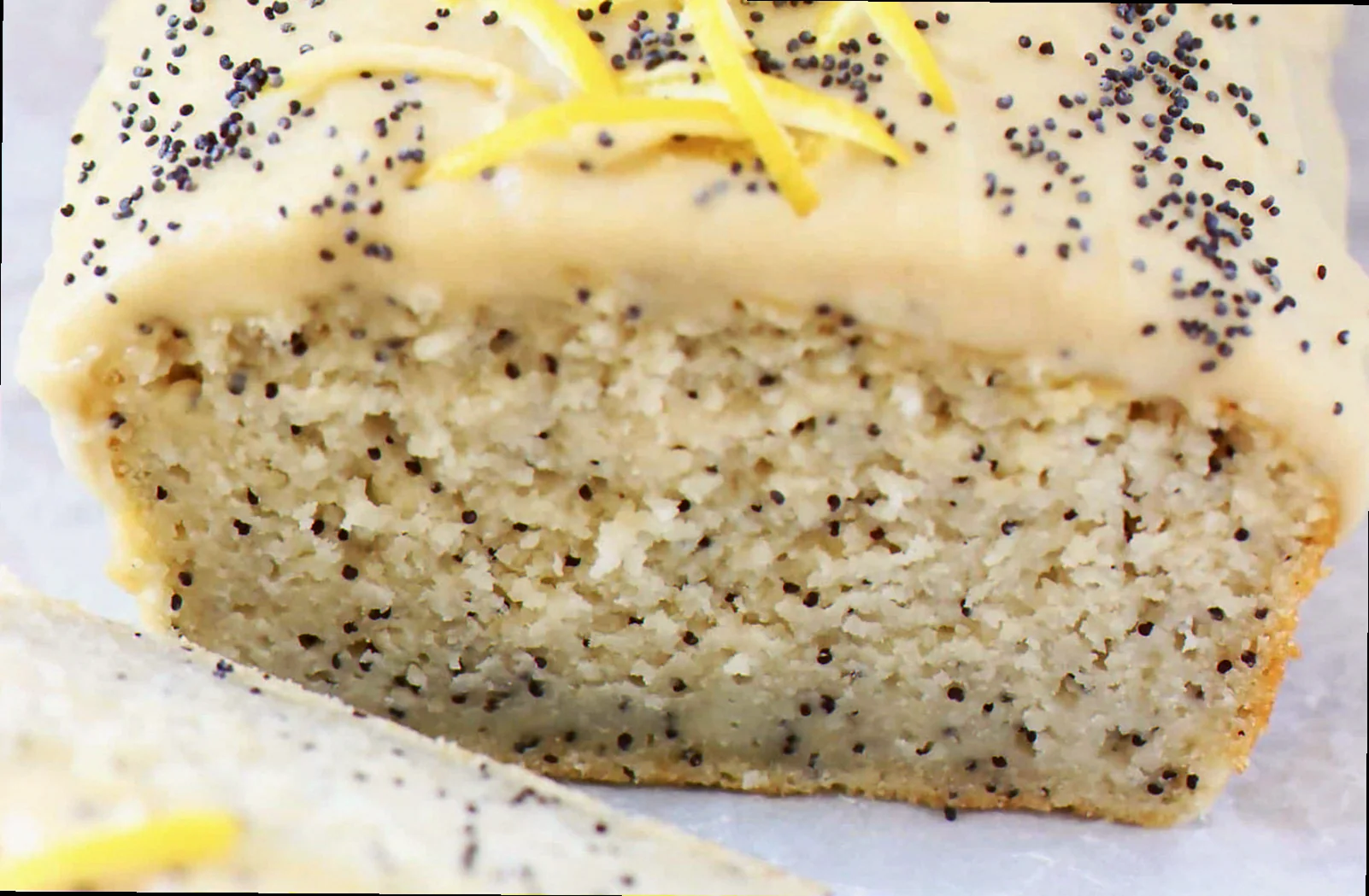
Your Vegan Poppy Seed Cake Collapsed Into a Dense, Gummy Brick
You sliced into it expecting a tender, moist crumb flecked with plump poppy seeds—only to find a leaden, gluey mass that clings to the knife. The edges might be over-browned or pale and spongy, the centre raw or alarmingly compact. This isn’t just “not perfect”; it’s a structural failure, often caused by overmixed batter, incorrect leavening, or fat that couldn’t emulsify properly. This guide dissects every possible failure in vegan poppy seed cake—from ingredient missteps to botched baking—and gives you the exact fixes to ensure a light, fragrant, evenly textured result every time.
What Perfect Vegan Poppy Seed Cake Actually Looks, Feels, and Tastes Like
| Stage | Success Marker — What You Should See / Feel / Smell / Hear |
|---|---|
| Before baking | Batter is thick but pourable (like heavy cream), with poppy seeds suspended evenly—no streaks of dry flour or oil slick on top. A spoon dragged through leaves a clean trail that slowly fills in. Smells sweetly nutty from the poppy seeds, with a faint tang from vinegar or yogurt. |
| Mid-bake (25–30 min in) | Dome rises evenly, cracks form a shallow, golden web (not deep canyons). Edges pull slightly from the pan. Internal temperature hits 90–92°C (194–198°F). A toothpick inserted at 30 min comes out with a few moist crumbs (not wet batter). |
| Just out of oven | Springy to the touch—press gently and it bounces back fully in 2 seconds. Crust is deep golden, not blotchy. The cake shrinks slightly from the pan sides as it cools. Poppy seeds are plump and glossy, not dry or chalky. |
| Cooled & sliced | Crumb is fine and tender, with a slightly damp (not wet) mouthfeel from the poppy seeds. Flavour unfolds in layers: first buttery sweetness, then earthy poppy seed nuttiness, finishing with a hint of citrus or vanilla. No aftertaste of baking soda or raw flour. |
The Ingredient Failures — Wrong Choices Before You Even Start Cooking
- Dense, Gluey Crumb: caused by all-purpose flour with 12%+ protein (too much gluten development) → fix: Use cake flour (7–9% protein) or substitute 15% of the AP flour by weight with cornstarch (e.g., 200g AP flour + 30g cornstarch).
- Cake Didn’t Rise (Flat or Sunken): caused by expired baking powder/soda or single-acting leaveners → fix: Test baking powder by mixing ½ tsp with 2 tbsp hot water—it should foam violently. Use double-acting baking powder (check label) and replace every 6 months.
- Gritty or Dry Poppy Seeds: caused by unsoaked or stale seeds → fix: Soak poppy seeds in hot plant milk (70°C/158°F) for 30 min before using. Use blue poppy seeds (not white) for richer flavour and moisture retention.
- Oily or Greasy Texture: caused by neutral oil with a low smoke point (e.g., olive oil) or cold coconut oil → fix: Use refined coconut oil (liquid at 25°C/77°F) or melted vegan butter (80% fat, like Miyoko’s). Measure oil by weight (1g = 1ml)—never by volume.
- Bitter or Soapy Aftertaste: caused by alkaline baking soda reacting with acidic ingredients improperly → fix: Balance 1 tsp baking soda with 1 tbsp apple cider vinegar or lemon juice in the wet ingredients. If using buttermilk substitutes (e.g., soy yogurt), ensure it’s unsweetened and live-cultured.
The Technique Failures — What Goes Wrong During Cooking
- Tunneling (Large, Irregular Holes): what it looks like → swiss-cheese texture with jagged cavities → caused by overmixing after adding flour (gluten overdeveloped) or oven too hot → fix: Mix dry and wet ingredients just until combined (10–15 strokes max). Bake at 170°C (340°F)—never above 175°C.
- Sunken Centre with Wet Bottom: symptom → cake collapses in the middle, gummy layer at the base → caused by underbaked interior (removed too soon) or opening the oven early → fix: Bake until internal temp reaches 92°C (198°F)—test with a probe thermometer. Never open the oven before 25 min.
- Rubbery or Chewy Crust: symptom → edges are tough, centre is springy but resistant → caused by overbaking or sugar crystallizing from uneven heat → fix: Tent loosely with foil at 20 min if browning too fast. Use fine granulated sugar (not raw or coconut sugar).
- Poppy Seeds Sink to the Bottom: symptom → seeds cluster in a dense layer at the base → caused by batter too thin or seeds not coated → fix: Toss poppy seeds in 1 tbsp flour before adding to batter. Ensure batter is thick enough to suspend seeds (add 1–2 tbsp extra flour if needed).
- Cake Sticks to the Pan (Even with Greasing): symptom → half the cake tears away when unmolding → caused by wrong pan prep or cooling too long in pan → fix: Line the pan with parchment paper + a thin layer of vegan butter, then dust with flour. Unmold after 10 min cooling—not fully cold.
The Equipment Failures — When Your Tools Are the Problem
- Dark or Nonstick Pans: what they cause → over-browned edges, raw centre (dark pans absorb too much heat) → use instead: Light-colored aluminum or glass pans. Workaround: Reduce oven temp by 10°C (50°F) if using dark pans.
- Oven Hot Spots: the failure → uneven rise, domed or lopsided cake → the fix: Rotate the pan 180° at 20 min. Use an oven thermometer to verify temp—home ovens can be 20°C (68°F) off.
- Wrong Mixing Bowl: the problem → batter overheats from metal bowls, or plastic retains oils → use instead: Glass or stainless steel bowls (chill metal bowls first if your kitchen is hot). Workaround: Place bowl over ice water for 2 min if batter feels warm.
The Full Recipe — Built Around Preventing Every Failure Above
Ingredients (with failure-prevention notes):
- 240g cake flour (7–9% protein) — prevents dense, gluten-heavy crumb
- 200g fine granulated sugar — dissolves evenly; no grittiness
- 1 tbsp baking powder (double-acting, fresh) — ensures full rise
- ½ tsp baking soda — balanced with 1 tbsp apple cider vinegar in wet ingredients
- ½ tsp salt — enhances flavour without overpowering
- 120g refined coconut oil (liquid at 25°C) — no greasy aftertaste
- 240g unsweetened soy yogurt (live cultures, 2% fat) — provides acidity for leavening and moisture
- 60g blue poppy seeds (soaked 30 min in hot plant milk) — plump, not gritty
- 1 tsp vanilla extract + zest of 1 lemon — brightens flavour
Method:
Soak the poppy seeds: Cover seeds with 120g hot soy milk (70°C/158°F), stir, and let sit 30 min — prevents dry, chalky seeds.
- Success marker: Seeds swell to nearly double in size, milk turns opaque beige.
Prep the pan: Line a light-colored 20cm (8") round pan with parchment, grease with vegan butter, dust with flour — prevents sticking.
- Success marker: Parchment adheres smoothly; no gaps.
Mix dry ingredients: Whisk flour, baking powder, soda, salt, and sugar — prevents clumps and uneven leavening.
- Success marker: Mixture is uniform, no lumps, and feels light when sifted through fingers.
Combine wet ingredients: Whisk coconut oil, yogurt, vinegar, vanilla, and lemon zest until fully emulsified — prevents oily layers.
- Success marker: Mixture is smooth and slightly thickened (like melted ice cream).
Fold batter: Add dry to wet in 3 stages, folding just until no flour streaks remain (10–15 strokes max) — prevents tunneling.
- Success marker: Batter is thick but pourable; a spoon leaves a clean trail that slowly fills.
Bake: Pour into pan, smooth top. Bake at 170°C (340°F) for 35–40 min — prevents doming or sunken centres.
- Critical control point (25 min in): Rotate pan 180°. Tent with foil if browning too fast.
- Success marker at 35 min: Internal temp 92°C (198°F), toothpick has moist crumbs.
Cool: Let rest in pan 10 min, then transfer to a wire rack — prevents soggy bottoms.
- Success marker: Cake shrinks slightly from pan sides and feels firm but springy.
How to Rescue Vegan Poppy Seed Cake When It Has Already Gone Wrong
- If the cake is dense/gummy (underbaked): Return to 160°C (320°F) oven for 10–15 min (cover with foil to prevent drying). Test with a probe—if centre is below 90°C (194°F), it’s salvageable.
- If the cake sunk in the middle: Trim the top 1cm off to remove the gummy layer, then toast slices in a pan with vegan butter—crisp edges disguise texture.
- If the poppy seeds taste bitter/chalky: Brush warm cake with simple syrup (1:1 sugar:water, heated) to add moisture and sweetness.
- If the cake is dry/crumbly: Serve with coconut whipped cream or a citrus glaze (powdered sugar + lemon juice) to add moisture.
- If it’s a complete disaster (raw centre, burnt edges): Crumble into trifle layers with vegan custard and fruit, or pulse into cake pops (mix crumbs with 2 tbsp jam, roll in chocolate).
Make-Ahead: Which Failures This Introduces and How to Avoid Them
- Staling (Dry, Crumbly Texture): caused by moisture loss in the fridge → fix: Wrap cooled cake tightly in plastic + foil and store at room temp for 2 days max. For longer storage, freeze sliced portions in airtight containers (thaw at room temp).
- Soggy Crust: caused by condensation in sealed containers → fix: Place a paper towel inside the container to absorb moisture. Reheat slices at 150°C (300°F) for 5 min to restore texture.
- Flavour Dulling: caused by volatile aromas dissipating → fix: Add a citrus glaze or spiced syrup just before serving to refresh flavour.
Related topics: Vegan baby food recipe book · Vegan potato bake recipe · Vegan sweet potato bread recipe
Diagnostic FAQ — Real Failures, Real Fixes
My cake rose beautifully but then collapsed after cooling — what happened?
Failure entity: Structural collapse → Cause: Overleavened batter (too much baking powder/soda) or opening the oven too early. Fix for next time: Use 1 tbsp baking powder per 200g flour max and never open the oven before 25 min.
It tastes eggy or soapy — where did I go wrong?
Flavour failure: Baking soda imbalance → Cause: Not enough acid to neutralize the soda (or expired soda). Fix: Ensure 1 tsp baking soda is paired with 1 tbsp vinegar or yogurt. Taste batter before baking—it should be slightly tangy, not bitter.
The poppy seeds all sank to the bottom — how do I fix this?
Texture failure: Seed migration → Cause: Batter too thin or seeds not coated. Fix: Toss seeds in 1 tbsp flour before adding, and check batter consistency—it should coat the back of a spoon thickly.