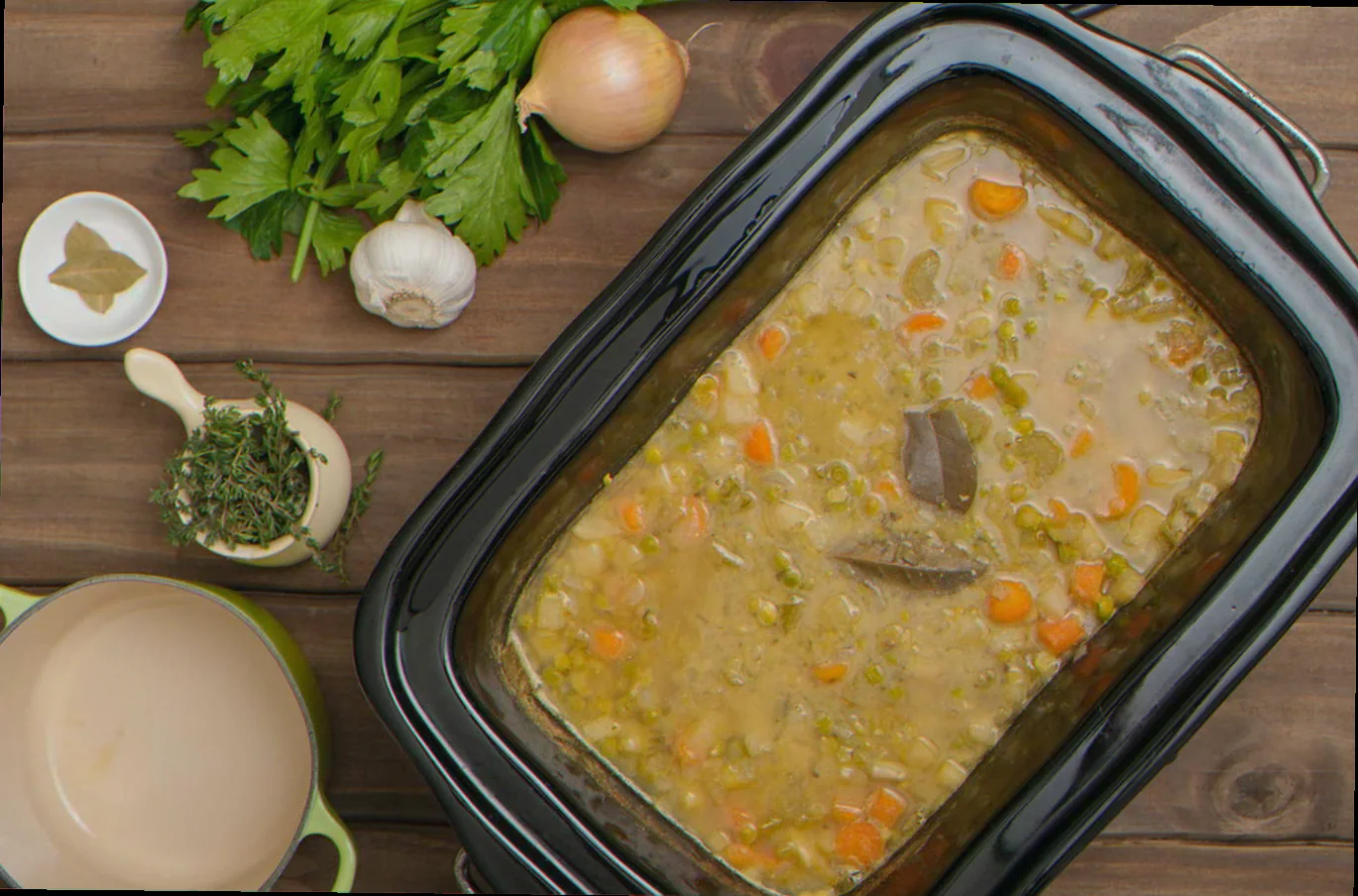
The first time I made vegan split pea soup in the crock pot, I ended up with a beige, gluey sludge that tasted like regret and overcooked celery. I’d followed a recipe that swore by dumping everything in at once—dried peas, broth, aromatics—and walking away for eight hours. What I got was a soup with the texture of wallpaper paste and a flavour so flat I considered adding a bouillon cube after cooking (spoiler: that doesn’t work). It wasn’t until I burned an entire batch—literally, the peas scorched to the bottom of the pot—that I realized the problem wasn’t the ingredients. It was the timing of the salt.
That was the revelation: Split peas don’t soften properly unless they’re salted at the right moment. Too early, and their skins toughen like little pea armour. Too late, and they turn to mush before absorbing flavour. Once I nailed that, everything else fell into place.
Why Most Versions of Vegan Split Pea Soup Fail
Most recipes treat split pea soup like a set-it-and-forget-it project, which is exactly why they produce grainy, bland, or worse—chalky results. The classic mistakes:
- Dumping everything in at once (especially salt and acid like tomatoes or vinegar) turns the peas into stubborn little pellets that never fully break down. You end up with a soup that’s simultaneously mushy and undercooked—some peas disintegrate while others stay firm, like a bad risotto.
- Using low heat for too long (the “8 hours on low” myth) leads to a soup that tastes like it’s been simmering in a hospital cafeteria. The flavours dull, the peas lose their sweetness, and the broth turns insipid.
- Skipping the bloom—not toasting the spices or sweating the aromatics first—means the soup lacks depth. Raw onion and garlic taste harsh even after hours of cooking, and ground cumin or coriander just sit there, tasting like dust.
The right version should be creamy but still textured, with peas that collapse into the broth but leave just enough body to chew. The flavour should be savory-sweet with a smoky edge, not one-note “green.” And the colour? A vibrant, golden-green, not the sad khaki of overcooked peas.
The Ingredients That Actually Matter
I’ve made this soup with every shortcut and premium ingredient under the sun, and here’s what I’ve learned:
Split peas (450g, green or yellow)—Yellow peas make a slightly sweeter, milder soup; green peas have more earthy depth. I prefer green for their robustness, but yellow if I’m serving it to skeptics who think “pea soup” sounds like punishment. Do not substitute lentils or whole peas—they won’t break down the same way, and you’ll end up with a stew, not a soup.
Smoked paprika (1 tsp, hot or sweet)—This is the secret weapon. Most recipes call for plain paprika, which adds colour but no soul. Smoked paprika (I use pimentón de la Vera) gives the soup a campfire depth that makes it taste like it’s been simmering all day, even if it hasn’t. A little goes a long way—too much and it tastes like liquid bacon (which, fine, but we’re going for subtle smokiness).
Dried thyme (1 tsp) and bay leaves (2)—Fresh thyme is overrated here; it wilts into nothing. Dried thyme blooms in the slow cooker, infusing the broth with a woody, slightly floral note. Bay leaves are non-negotiable—they add a bitter backbone that balances the sweetness of the peas.
Celery (3 stalks, diced)—Most recipes tell you to use the leaves for garnish. Lie. The leaves are where all the flavour is. I chop the stalks fine for texture and throw in a handful of leaves for a bright, herbal punch. If your celery is sad and bendy, roast it first (400°C for 15 minutes) to concentrate its flavour.
Carrots (2 medium, diced)—They’re not just for colour. Carrots add natural sweetness that rounds out the earthiness of the peas. But if you use those pre-cut “baby” carrots, your soup will taste like a kindergarten snack. Real carrots, cut into small cubes, so they melt into the broth.
Vegetable broth (1.5L, low-sodium)—Store-bought is fine, but if it’s salty, your soup will be unfixably briny. I use half broth, half water to control the seasoning. (Homemade broth is better, but I’m not making stock every time I want soup.)
Liquid smoke (½ tsp, optional but transformative)—This is controversial, but hear me out: A tiny bit of liquid smoke (I use Wright’s hickory) mimics the depth of a ham hock without the ham. Do not overdo it—you want a whisper, not a shout. Skip if you’re serving purists.
Lemon juice (1 tbsp, added at the end)—This is the flavour brightener. Split pea soup without acid is like a joke without a punchline. Lemon cuts through the richness and makes everything taste more alive. Lime works too, but it’s sharper—save that for a Mexican-inspired version.
The Moment Everything Changes: Salt Timing
Here’s the science: Split peas absorb liquid differently than other legumes. If you salt them early, the outer skins toughen up, trapping starch inside. The result? A soup where the peas stay grainy and resistant, no matter how long you cook them.
The fix: Wait until the peas are fully softened before adding salt. That means:
- No salt in the initial broth. None. Not even a pinch.
- Cook the peas in plain liquid (broth + water) for 3–4 hours on high (or 5–6 on low) until they’re falling apart when stirred.
- Only then add salt—1 tsp to start, then adjust. This lets the peas break down completely before their structure sets.
The difference is night and day. Before, my soup was chalky and uneven. After? Silky, cohesive, and deeply flavourful, with peas that dissolve into the broth like they’re supposed to.
How I Actually Make It Now — Step by Step
[The Dry Toast]—I start by toasting the dried thyme, smoked paprika, and cumin seeds (½ tsp, lightly crushed) in a dry skillet over medium heat for 30 seconds, until fragrant. This wakes up the spices so they don’t taste like dust. I dump them straight into the crock pot—no need to wash the skillet.
[The Aromatic Base]—In the same skillet (now with 1 tbsp olive oil), I sweat 1 diced onion, 3 celery stalks (plus leaves), and 2 diced carrots over medium-low heat for 8–10 minutes, until the onion is translucent but not browned. This step is non-negotiable—raw alliums make the soup taste harsh. I scrape every bit into the crock pot.
[The Pea Layer]—I rinse 450g split peas under cold water (to remove any dust), then add them to the pot with 1.5L low-sodium veg broth + 500ml water, 2 bay leaves, and the toasted spices. No salt yet. I stir, put the lid on, and set it to high for 3–4 hours (or low for 5–6).
[The Salt Window]—After 3 hours, I check the peas. They should crumble when pressed against the pot’s side. If they’re still firm, I give them another 30–60 minutes. Once they’re soft, I add 1 tsp salt and ½ tsp black pepper, stir, and let it cook another 30 minutes to meld.
[The Finish]—I turn off the heat and stir in 1 tbsp lemon juice. If the soup is too thick (it usually is), I thin it with 100–200ml hot water. I fish out the bay leaves, taste, and adjust salt—usually another ½ tsp.
[The Smoky Touch (Optional)]—If I’m feeling fancy, I’ll stir in ½ tsp liquid smoke at the end. It’s not traditional, but it adds a meaty depth that fools omnivores.
The Failures I Still See—and How to Fix Them
- Grainy soup with hard pea skins—You salted too early. Fix: Blend half the soup until smooth, then mix it back in. Next time, wait until the peas are soft before salting.
- Bland, flat flavour—You skipped toasting the spices or sweating the aromatics. Fix: Stir in 1 tsp miso paste or ½ tsp nutritional yeast at the end for umami. Next time, don’t skip the skillet steps.
- Soup tastes like dirt—Old split peas or using tap water with high minerals. Fix: Add a pinch of sugar and more lemon. Next time, use filtered water and check your peas’ expiry date.
When I Make This and What I Serve It With
This is my Sunday supper soup—the thing I make when I want the house to smell like comfort and have leftovers for the week. It’s too hearty for summer, but from October to March, it’s in heavy rotation.
I serve it with:
- Crusty sourdough (toasted, rubbed with garlic)—the chew contrasts the creaminess.
- Quick-pickled red onions (thinly sliced, soaked in apple cider vinegar + 1 tsp sugar for 20 minutes)—the acid cuts through the richness.
- A simple green salad (arugula + lemon vinaigrette) to keep things fresh.
For drinks: Dry hard cider (the effervescence cleanses the palate) or smoky black tea (Earl Grey or Lapsang Souchong).
Substitutions I’ve Tested Honestly
- Split peas → Red lentils—They cook faster but turn to mush in 2 hours. The flavour is lighter and sweeter, which works if you’re going for a dal-like soup, but it’s not the same.
- Smoked paprika → Chipotle powder—It’s spicier and more aggressive. Use ½ tsp max unless you want a spicy soup.
- Vegetable broth → Mushroom broth—This is a great upgrade if you have it. The umami makes the soup taste richer and more complex.
- Gluten-free? Already is. Nut-free? Yep. Soy-free? Just skip the liquid smoke (some brands contain soy).
Questions I Get Asked About Vegan Split Pea Soup
“Can I make this in an Instant Pot?”
Yes, but it’s not better. Pressure-cooking split peas turns them to baby food texture in 15 minutes, which is fine if you’re in a hurry, but you lose the slow-melded depth of the crock pot. If you must: 10 minutes high pressure, natural release, then salt and lemon at the end.
Related topics: Vegan vegetable stew crock pot recipes · Vegan curry mee recipe · Jackfruit pulled pork vegan recipe
“Why is my soup gray?”
Old peas or overcooking. Split peas fade from green to khaki the longer they cook. To keep the colour bright, don’t exceed 6 hours total and use fresh peas (check the package date).
“Can I freeze it?”
Yes, but the texture changes. The peas absorb more liquid when thawed, so it’ll be thicker and pastier. Fix it by blending half before freezing, then thinning with broth when reheating. It’ll still taste good—just less rustic.